Global Offices


How Does Seating Capacity Define the Modern Movie-Going Experience?
For cinema investors, the first core question after securing a venue is often: “How many seats can this cinema actually hold?”
Yet the answer is rarely as straightforward as it seems. Why does one 200-square-meter space accommodate 150 seats, while another fits only 120?
Optimizing cinema seating extends beyond simple floor area calculations. This article explores the key factors that determine auditorium seating capacity and how thoughtful seat planning can optimize return on investment.

How Many Seats in a Cinema?
To understand differences in seat counts, it is essential to examine four core parameters that shape the physical viewing experience and set the upper limit on capacity.
1. Row Spacing (Pitch)
Row spacing is the distance between the backrests of consecutive rows, directly dictating the legroom available to patrons.
In standard commercial theaters, a pitch of 1.0 to 1.2 meters is typical, granting sufficient clearance for a conventional seated posture.
For VIP cinema seating, spacing should extend beyond 1.5 meters to allow seats to recline fully without intruding on the row behind.
Every additional 10 centimeters of row spacing may reduce the total number of rows by one, significantly affecting the overall seat count.
2. Seat Width
The center-to-center distance between armrests generally measures seat width.
Standard cinema seating ranges from 550 mm to 600 mm, leaving each viewer approximately 450 to 500 mm of actual seating space after accounting for armrests.
However, the center distance often expands to around 700 mm to accommodate wider chair bodies and armrests for VIP cinema seating.
3. Sightline Constraints
The theater must be configured with rigorous sightline analysis to ensure every guest has an unobstructed view of the screen.
To achieve this, the implementation of stadium seating cinema profiles is now the industry standard.
- Front Row Sight Distance:To mitigate neck strain, the distance between the first row and the screen should be at least 0.6 times the screen width. Furthermore, the vertical viewing angle to the top of the screen must not exceed 35°.
- Horizontal Viewing Angles:Per SMPTE standards, the angle from the outermost seats to the far edge of the screen should be at least 30°. Consequently, dead zones at the peripheries cannot be utilized, effectively curtailing the cinema’s functional depth and width.
4. Fire Safety and Egress Protocols
As high-occupancy venues, cinemas are subject to stringent safety regulations that dictate the final safe capacity.
- Aisle Clearance: Longitudinal and transverse aisles generally require a minimum clear width of 1.1 meters, scaled according to total occupancy.
- Row Length Restrictions:Fire codes impose limits on the number of seats per row; for instance, rows with dual-access egress are capped at 22 seats, while single-access rows are even more restricted. These mandates require dedicated corridor space, reducing the total seating area available.
Main Cinema Types and Seating Ranges
Drawing on different combinations of the parameters outlined above, modern cinemas have developed several types, each defined by a distinct seating range and functional role.
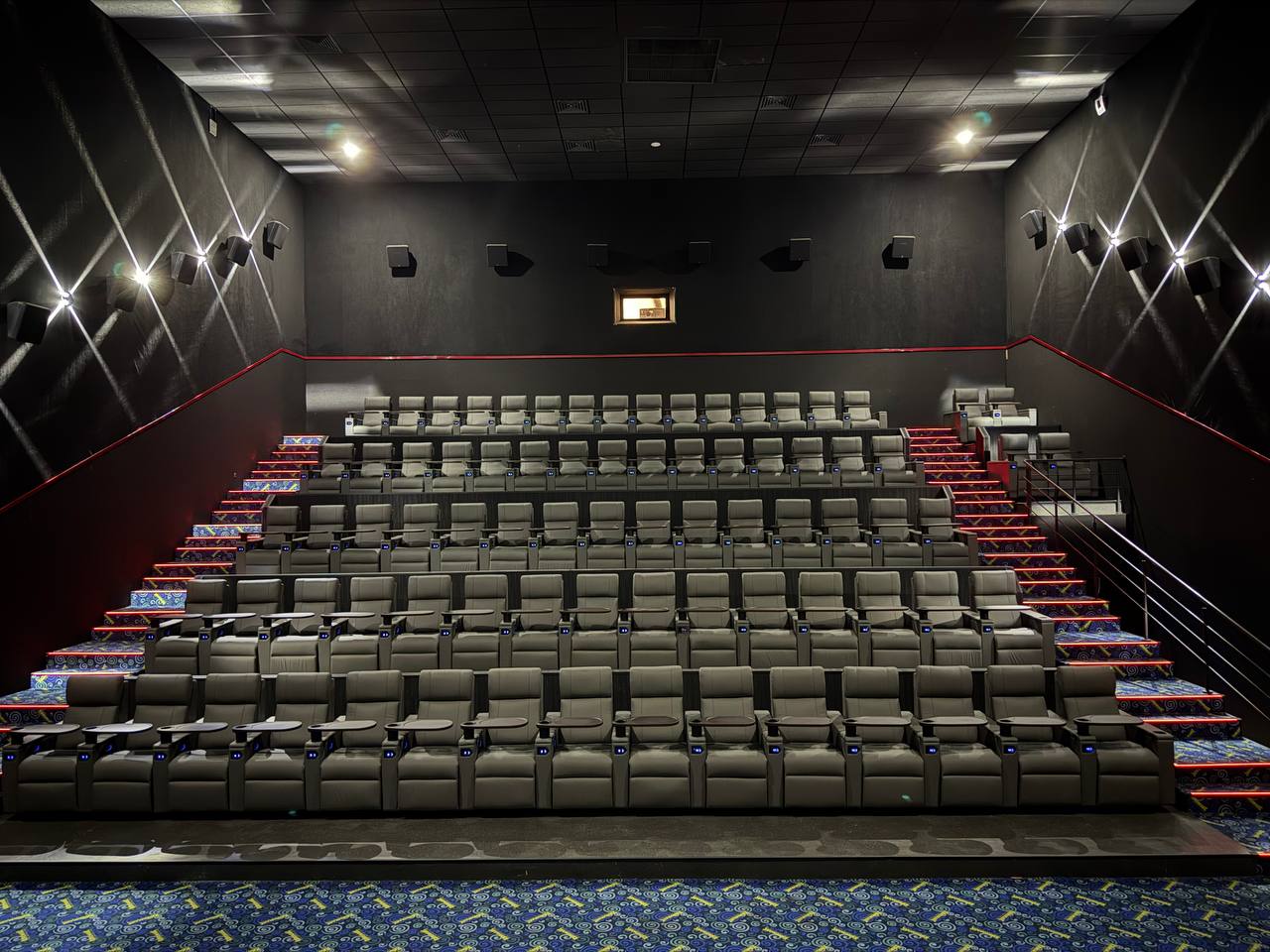
1. Large Format (IMAX/CGS)
Designed for immersive spectacle, IMAX/CGS typically seats 250–500. Screen widths exceed 18 meters, with top-tier installations reaching 26 meters or more.
These flagship halls utilize steep raking and generous row spacing, delivering the immersive spectacle that defines the large-format experience.
2. Standard Screens
Standard halls emphasize versatility and operational efficiency, providing the foundation for steady foot traffic.
Mid size houses (120–250 seats) represent the most common configuration, striking a balance between capacity and comfort while serving as the primary venue for mainstream commercial films.
Smaller screens (80–120 seats) offer greater scheduling flexibility, making them ideal for independent films, specialty titles, or overflow screenings when major blockbusters sell out.
3. VIP Cinemas / Fully Reclining Lounge Halls
These venues prioritize experience over volume, generally seating 40–80. VIP auditoriums employ premium electric recliners and generous row spacing, achieving ample room even when seats are fully extended.
By integrating cinema premium seats with in-seat dining, operators can significantly boost Revenue Per Seat (RPS), using higher ticket prices and ancillary services to offset the reduced capacity.
4. Couples’ Screens / Themed Halls
With a cozy capacity of 20–50, these spaces cater to social, intimate experiences. Cinemas with love seats (paired configurations with shared or removable armrests) permit couples to sit together comfortably.
These themed venues target younger demographics seeking a sense of occasion and privacy, making them a hallmark of a differentiated cinema offering.
5. Children’s Theaters / Family Halls
Purpose built for family audiences, these theaters seat 50–100 guests. The cinema seating dimensions and row spacing are adapted to accommodate children, often accompanied by vibrant décor, soft padding for safety, and dedicated children’s play areas.
Strategy for Cinema Investors
1. Density Based on Market Positioning
Rather than asking, “How many seats can I fit?” first clarify your target audience.
Are you catering to price-sensitive moviegoers who prioritize volume, or quality-conscious consumers willing to pay a premium for comfort?
In prime commercial districts, exorbitant rental costs necessitate a higher seating density to offset overhead.
Conversely, within affluent residential areas, the high price premium commanded by superior comfort becomes the primary driver of profitability.
2. Differentiated Hybrid Configuration
A successful cinema layout typically adheres to the “1+N” principle: maintaining a single large-format auditorium capable of handling massive footfall, complemented by several standard halls to maintain high screening frequency, and 1–2 VIP lounges designed to capture high-net-worth patrons.
This strategic mix enables the multiplex to remain resilient against the seasonal fluctuations of the film market.
3. Future-Proofing the Hardware Lifecycle
When finalizing the terraced flooring structure and row spacing, it is imperative to set aside sufficient spatial allowance for future upgrades.
For instance, designing a standard hall with slightly more generous pitch facilitates future retrofitting with larger premium recliners or advanced haptic feedback technology without requiring a total structural overhaul.

Why Choose Leadcom
In fulfilling the aforementioned planning requirements, a high-standard seating supplier is a critical factor in guaranteeing the successful implementation of the solution. At Leadcom, we deliver on this promise through four core strengths:
- Comprehensive Product Portfolio:From standard cinema seating and VIP cinema recliners to cinemas with love seats and child-specific chairs, we offer tailored solutions for every hall type.
- Strong Manufacturing Scale:With three specialized production facilities spanning a total area of 120,000 square meters, we boast the capacity for mass production and rapid delivery, ensuring timely completion of large-scale projects or urgent orders.
- Ample Production Capacity:A monthly output of 80,000 seats guarantees a stable and consistent supply, even for ultra-large cinema chain projects.
- Highly Autonomous Supply Chain:With 99% of components manufactured in-house, every step from raw material selection to the final assembly of cinema premium seats remains under strict quality control, delivering reliable and consistent product quality.
Conclusion
Seat count has never been just a simple number. A successful cinema is rarely the one with the most seats; it is the one that best aligns with its target audience’s demand. Shifting the focus from sheer capacity to thoughtfully crafted experience represents the core evolution of modern cinema management.
As a professional seating supplier, Leadcom is committed to delivering the solid foundation that makes this shift possible through our diverse offerings and robust manufacturing capabilities.