


 Global Offices


The Purchase Checklist of Furniture for Educational Institutions: 7 Must-Ask Questions
In educational investment, learning space furniture is often an underestimated yet crucial asset. Have you ever faced issues like frequent maintenance, student complaints, or even safety hazards because you chose the wrong educational furniture?
Behind poor choices often lurk significant hidden costs: high maintenance fees, reduced learning efficiency, student health risks, and rapid asset depreciation.
This article aims to outline the 7 critical questions that must be answered before procurement, especially for lecture hall seating. This will help you avoid the low-price trap and make the most cost-effective, long-term investment decision.
Question 1: How to Calculate the True Cost of Furniture?
Many educational institutions are easily attracted by low initial quotes when making purchases, but this is often a costly misunderstanding. The true cost calculation goes far beyond the number on the procurement invoice.
An enticingly low price is often achieved through compromises in materials and craftsmanship, such as weak connectors and rough paint finishes. While such products may suffice in the short term, they typically exhibit high long-term failure, damage, and replacement rates.
Hidden Costs
- Maintenance Costs:Frequent tightening of screws, replacement of parts, and repair of breakages demand continual investment in labor and funds.
- Replacement Frequency: Poor durability necessitates a faster replacement cycle. This forces the organization to purchase new units more frequently, increasing procurement workload and leading to greater resource waste.
- Impact on Efficiency: Uncomfortable furniture can cause restlessness and frequent posture adjustments among students, directly diverting their attention from learning.
Suggestion: Cultivate a philosophy of “value-based procurement” rather than “price-based procurement.”
Question 2: Can the Education Seating Support Extended Sitting?
University students regularly log multiple hours seated in classes and lectures. Enduring this static load on non-ergonomic furniture promotes poor posture, such as slouching and forward head posture, which leads to chronic discomfort and can undermine both spinal health and the ability to focus.
Truly ergonomic design for higher education must meet these core requirements:
- Precise Size Matching:Seat height should allow feet to rest flat on the floor without pressure behind the knees, while desk height enables elbows to rest naturally at a 90-degree angle for comfortable writing and typing.
- Scientific Support:The chair back must provide adequate lumbar support to minimize spinal strain.
- Dynamic Adaptability: Adjustable desks and chairs are essential, which can accommodate the diverse body types of young adults.
Question 3: What Are the Primary Usage Scenarios
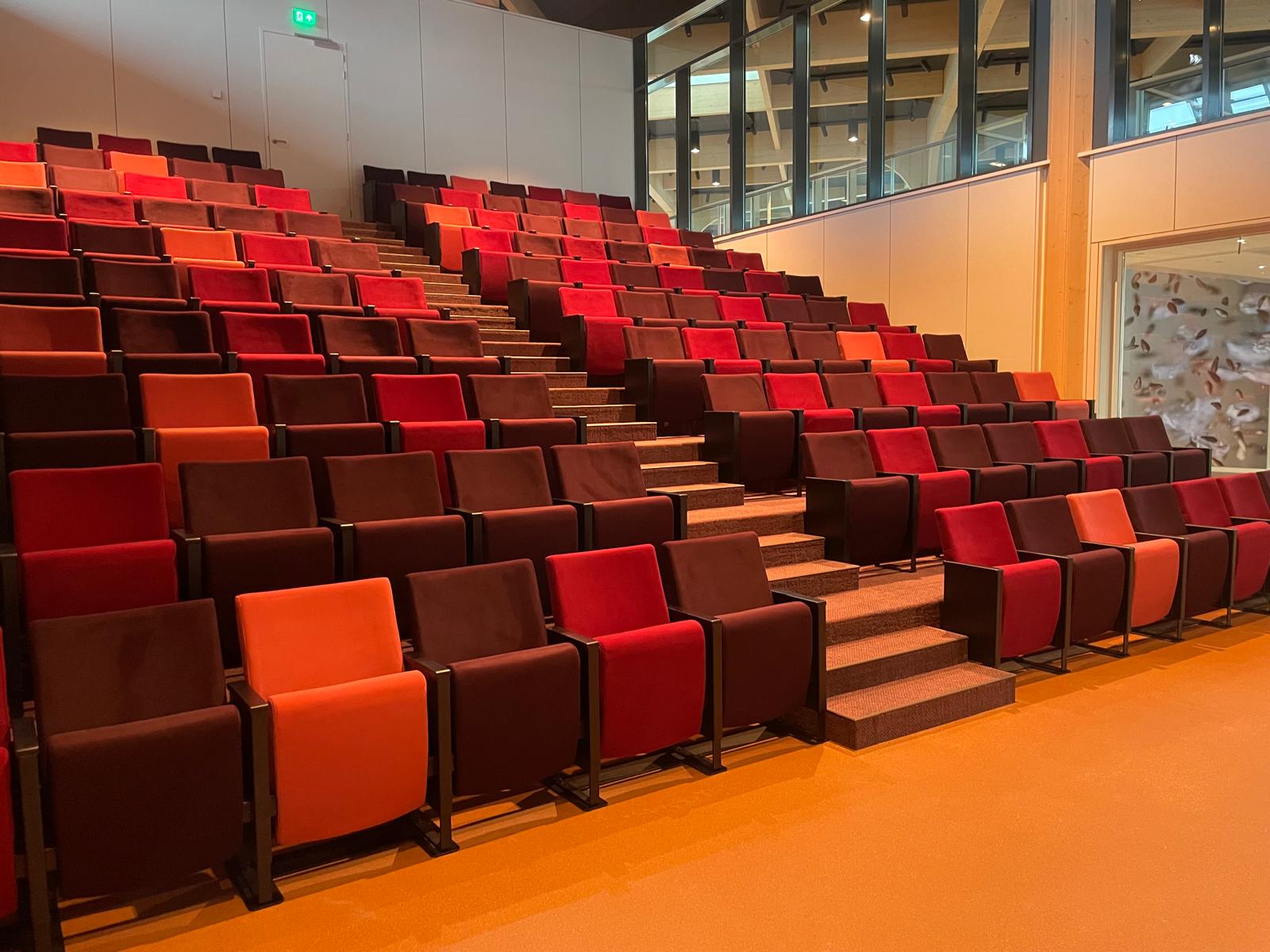
1. Auditorium/Lecture Theatre
- What mechanisms should be selected to minimize noise generated when seats are retracted or moved, thereby preserving a proper acoustic environment for teaching and learning?
- Can the finishes and structural components of the auditoriumchairs contribute positively to the acoustic performance of the space?
- How does the seat design accommodate hundreds of students in simultaneous note-taking and digital interaction to meet the demands of modern pedagogy?
- How is the balance between optimal space density and generous row spacing achieved to ensure both capacity and safe, comfortable ingress/egress for all attendees?
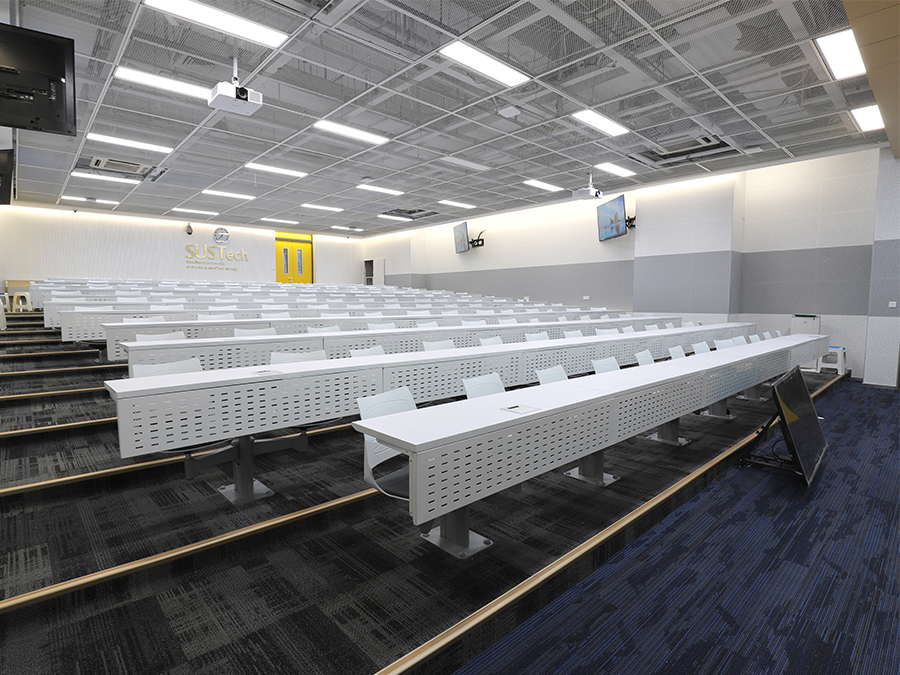
2. Lecture Hall/Tiered Classrooms
- Given the fixed slope of tiered classrooms, how will you ensure the structural design and installation of the lecture hall seating can precisely conform to the gradient, guaranteeing absolute stability and zero risk of wobbling?
- How will you design the seating and desktop heights to guarantee students in the back rows have an entirely unobstructed line of sight, optimizing the visual learning experience?
- What higher standards are you setting for the load-bearing capacity of the frame and the abrasion resistance of the surface finish?
3. Flexible Interactive Spaces
- To support small group collaboration and rapid layout changes, must your furniture feature lightweight design, casters, and locking mechanisms?
- When rapid clearing or reconfiguration is necessary, do you require flip-top training tablesor high-efficiency stackable chairs to maximize the space’s turnover efficiency?
- How will you ensure that mobile and flexible learning furniture maintains low noise levels during movement to avoid disturbing adjacent spaces?
Question 4: Which Safety and Compliance Standards Must Be Met?
Safety is the non-negotiable bottom line. The procuring party must exercise due diligence.
- Quality Certification: Verify relevant international and national quality certifications (e.g., ISO 9001 Quality Management System, US BIFMA furniture performance standard, European EN standards) to ensure structural stability and load-bearing capacity.
- Fire Retardancy:For high-occupancy areas like auditoriums and dormitories, materials must comply with relevant fire retardancy standards (e.g., national GB/T 20286).
- Formaldehyde Emissions:The panels, adhesives, and finishes should meet national E1/E0 grade or stricter environmental standards (e.g., Green Guard certification) to minimize off-gassing.
- Heavy Metal Content: Confirm that paints and plastic components comply with standards, safeguarding indoor air quality and creating a healthy environment for students.
Question 5: How to Choose Materials and Finishes?
1. Seat and Backrest Materials
- Plastic (ABS/PP):Advantages include a wide range of colors, ease of cleaning, and controllable cost, making it suitable for high-frequency use scenarios with limited budgets.
- Wood/Wood-Based Panels: This material is sturdy and durable. While solid wood is costly, high-quality particleboard or MDF is are economical and durable alternative. Pay close attention to the edge-banding process, as poor sealing can lead to moisture absorption and swelling.
- Metal: Extremely robust and durable, metal is commonly used for the legs and frames of lecture hall seating.
- Fabric:Prioritize materials that are highly wear-resistant, stain-resistant, easy to clean (preferably with antimicrobial properties), and flame-retardant.
- Fillings: High-densityoffers greater structural integrity for enhanced support, improved resistance to permanent sagging, and superior longevity. This ensures the seat maintains its comfort and shape over extended use.
2. Frame and Craftsmanship
- Load-Bearing Capacity: The frame of the lecture hall seating must possess excellent load-bearing capacity to reliably support the weight of students’ laptops, books, and other belongings.
- Impact-Resistant Rounded Corners: All edges and corners, particularly on metal and wooden parts, must be rounded to minimize the risk of impact injuries.
- Structural Stability and Surface Treatment: Check that reinforcements are used at connection points and that there is no unusual noise or wobbling when shaken. The surface coating on metal parts should be even, free of grit, and scratch-resistant.
Question 6: Which Value-Added Functions Are Required?
Based on modern teaching needs, consider the following value-added features to enhance the functional scalability of the lecture hall seating:
- Storage Functionality: Eases student burden and keeps the classroom tidy. E.g., book bag hooks (safe and convenient), book nets or shelves (for textbooks and supplies).
- Writing Functionality:Matching writing surfaces, which can be foldable or pull-out tablet arms, saving space when not in use.
- Technology Integration: To adapt to digital teaching trends, consider built-in power sockets, USB charging ports, and cable management systems to support the use of electronic devices like laptops and tablets.
Question 7: Can the Supplier Provide Comprehensive Project Support?
A reliable supplier is the key guarantee of project success, offering not just lecture hall seating, but a holistic solution.
- Customization Capability: An excellent supplier should be able to offer customized designsfor size, color, and functionality based on your space layout and specific teaching needs, rather than just pushing standard products.
- Logistics and Installation: Supply professional end-to-end services such as on-site measurement, detailed design finalization, logistics and delivery, professional installation, and post-installation cleanup.
- After-Sales Service and Warranty:Clearly define the warranty period and scope. Do they offer timely repair, spare parts support, and ongoing maintenance?
- Project Experience: Evaluate whether the supplier has successful case studies of a similar scale and type of educational institution to prove their professional capability and credibility.

Furniture for Educational Institutions from Leadcom
Whether your project demands customized lecture hall seating or flexible multi-purpose flip-top tables, Leadcom delivers solutions that exceed expectations.
- Our ARCADIA ELITEis the premier choice for space-constrained venues and lecture halls, with a compact width of just 20.5 inches (approx. 52 cm). It combines a space-efficient design with superior comfort, featuring ergonomic, cold-molded cushions and a built-in tablet arm.
- The Titan LS-420boasts a clean, modern design that masterfully blends practicality, durability, and versatility. These seats can be configured in pairs to form straight or curved rows and perform flawlessly on both tiered and flat floors. The 360-degree swivel seat glides smoothly along a rotating aluminum arm, fostering dynamic, cross-row collaborative learning.
- The ODEON LS-418flip-top training table is engineered for ultimate flexibility, easily adapting to settings ranging from impromptu business meetings to individual workstations. It employs high-strength, die-cast magnesium alloy connectors and joints, complemented by a durable melamine surface finish that is safe, robust, and low in emissions.
Conclusion
By systematically addressing the 7 core questions in this checklist, you move from price-based procurement to value-based procurement”.
At Leadcom, we are your partner in this endeavor. We provide certified, future-ready solutions that are built to meet the highest standards. From the space-saving precision of the ARCADIA ELITE and the collaborative dynamism of the Titan LS-420 to the agile flexibility of the ODEON LS-418, our products are engineered to deliver unparalleled durability, ergonomics, and innovation.

